TDI Weekly brings you curated updates on diplomatic developments every Friday. Subscribe and join over 7,000 readers (+ get access to the monthly Diplomatic Insight Magazine!)
Share
Alliance Under Fire 🧯
Published 6 days ago • 6 min read
The Diplomatic Insight Weekly
World changes within seconds; And it's been a week!
Hello Reader
An alliance is only as strong as the choices it makes under pressure. For Pakistan and Turkiye, that test may be closer than expected. Let’s explore what it means for Pakistan and the wider region.
_Alliance Under Fire_
The first real test of the Makkah Defense Pact may have arrived sooner than its architects expected. Houthi attacks on Saudi Arabia and the intensifying fighting in Yemen are raising the stakes across an already volatile region. With Pakistan, Saudi Arabia and Turkiye bound by a landmark mutual defense agreement, a dangerous question now hangs over the region: if the conflict escalates, will Islamabad and Ankara stand beside Riyadh on the battlefield, or will they try to stop the crisis before it spirals into a wider war?
For Pakistan, the stakes go far beyond its alliance with Saudi Arabia. Its economy, energy security, delicate relationship with Iran and the safety of its military personnel could all be caught in the crossfire.
Pakistan has strong strategic, military and economic ties with Saudi Arabia, making it difficult for Islamabad to remain indifferent to attacks on the kingdom. Following the escalation, the agreement's joint mechanism moved towards implementing collective defense commitments, including the provision and rapid deployment of agreed military forces and capabilities to Saudi Arabia. However, the precise scale of Pakistan's contribution and whether Pakistani personnel will participate in combat operations have not been clearly established publicly.
Islamabad faces a delicate balancing act. It must demonstrate that its security commitments are credible without becoming entangled in another protracted regional war. Intelligence sharing, air defense, military coordination and logistical assistance could strengthen Saudi security while allowing Pakistan to avoid direct offensive operations against the Houthis.
Turkiye is equally important to the alliance, bringing an established defense industry, drone technology and substantial military capabilities. Its participation alongside Pakistan signals that the agreement is intended to be more than a diplomatic declaration. Yet, the exact operational role of Turkish forces remains unclear. Ankara must weigh its strategic partnership with Riyadh against the risks of a prolonged confrontation in Yemen and the wider Middle East.
For now, a direct military spillover into Pakistan is not inevitable, but the risks are real. A prolonged conflict could expose Pakistani personnel stationed in Saudi Arabia to missile and drone attacks, threaten energy supplies and push oil prices higher. Pakistan's dependence on imported energy, already difficult economic conditions and a long border with Iran make any wider regional confrontation particularly sensitive.
There is also a diplomatic risk. If the conflict expands into a broader confrontation involving Iran, Pakistan could face pressure to choose sides despite its need to maintain stable relations with Tehran. Attacks on Pakistani personnel or territory would raise the stakes considerably, potentially drawing Islamabad deeper into the conflict.
The real question is whether the alliance can deter further attacks without becoming a mechanism for escalating them. If Pakistan and Turkiye help strengthen Saudi Arabia's air defenses while encouraging restraint, the agreement could demonstrate its value without requiring a wider war. If the commitment is interpreted as a blank cheque for offensive military operations inside Yemen, however, it could deepen an already destructive conflict.
The solution ultimately requires more than military coordination. Saudi Arabia and the internationally recognized Yemeni government must pursue negotiations alongside efforts to protect civilians and secure maritime routes. Regional diplomacy involving Iran, Saudi Arabia and other relevant parties will also be essential to reducing the risk of further escalation.
The Makkah Defense Pact now faces a defining moment. Pakistan and Turkiye must show that their security commitments carry weight, but they must also establish clear limits on their involvement. The alliance's greatest achievement would not be to win a wider war in Yemen, but to prevent one from spreading across the region.
~~_...._...._...._...._...._...._~~
Farkhund Yousafzai
Found this insightful?
Forward this issue to the one who should be reading it.
Alliances are tested not when threats are distant, but when partners must decide what their commitments mean in practice!
Pakistan, Türkiye and Saudi Arabia’s mutual-defence pact is moving towards operational reality amid Houthi attacks, raising questions about how collective security can protect Saudi Arabia without widening the regional conflict.
Air superiority is not the same as immunity from attrition!
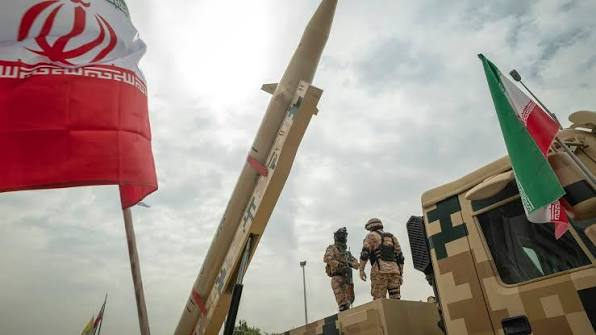
A US congressional report identifies 81 aircraft and drones lost or damaged in the Iran war, underscoring how sustained combat can erode even a technologically superior military’s capacity and drive up the cost of maintaining its advantage.
A government may restore order in the streets and still lose authority in the eyes of the public!
Calls for Interior Minister Laurent Nuñez to resign after serious injuries during student protests expose a difficult democratic test: how to enforce public order without undermining the legitimacy of the institutions enforcing it.
A political legacy can command loyalty, but it cannot guarantee the next mandate!
Flávio Bolsonaro’s first-round lead over President Luiz Inácio Lula da Silva, 47.03% to 45.16%, sets up a close October 25 runoff and shows that Brazil’s political divide remains deeply entrenched, with neither camp able to claim a decisive public mandate.
When housing becomes unaffordable, the crisis eventually reaches the ballot box!
Pedro Sánchez’s decision to call a snap election for November 29 after parliament rejected housing relief measures turns a policy dispute into a broader test of whether Spain’s government can translate public frustration over living costs into a workable political mandate
Global Women Insight Season 3 Exclusive Interview with Masarrat Misbah
UN Secretary-General António Guterres has acknowledged Pakistan’s efforts to facilitate US-Iran dialogue, underscoring Islamabad’s potential to keep diplomatic channels open when confrontation threatens to narrow the space for compromise.
Pacific leaders are pressing COP31 to treat fossil fuel reductions as a firm commitment, not a bargaining chip, sharpening the divide between countries seeking a faster energy transition and those reluctant to move away from fossil fuels.
African Union’s return to Tripoli after years of operating from Tunis restores a direct channel for dialogue and coordination with Libya, giving institutional presence renewed significance in a country where political stability remains central to regional cooperation.
G7’s planned release of 100 million barrels of oil and refined fuels seeks to ease price pressures, but the measure also exposes the limits of emergency stockpiles: they can cushion a supply shock, not resolve the conflict disrupting energy flows.
Moscow Format talks ended without a joint statement as Pakistan and Afghanistan failed to bridge their differences, exposing the limits of multilateral engagement when cross-border security concerns remain unresolved, even as Russia seeks broader regional cooperation with Kabul.
A Deeper Look
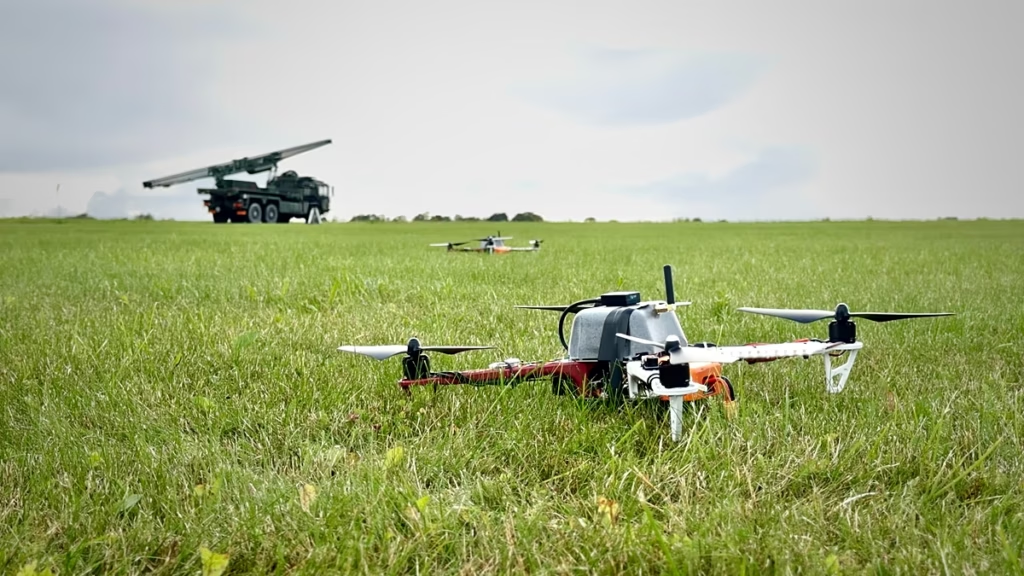
Europe is indirectly learning from Washington's costly lessons in the Iran war.
READ "Cheap Drones, Costly Lessons: Europe’s Baltic Answer to a Russian Threat"HERE
By Uzair Ahmed
Gen Z isn't trapped in the panopticon; it walked in for the "likes"
READ "Why Gen Z Is Voluntarily Living in the Panopticon"HERE
By Aqsa Fazilat
Space war's real front isn't the satellite but the signal, and no rules govern it.
READ "The War on the Signal: How Iran Rewrote the Logic of Counterspace"HERE
TDI Weekly brings you curated updates on diplomatic developments every Friday. Subscribe and join over 7,000 readers (+ get access to the monthly Diplomatic Insight Magazine!)
The Diplomatic Insight Weekly World changes within seconds; And it's been a week! Hello Reader When the troops leave, who holds the leverage? America’s military chapter in Iraq may be closing, but the struggle over sovereignty, financial dependence, and regional influence is far from over. Let’s unpack what this shift means for Baghdad, Tehran, Washington, and the balance of power across the region. _Iraq, Unoccupied_ On the last day of September, the final American convoy rolled out of...
The Diplomatic Insight Weekly World changes within seconds; And it's been a week! Hello Reader UN is good at giving the world a room! The harder question is what happens when the world leaves that room without an answer. As another week of diplomacy unfolds along the East River, the gap between what is said, what is heard, and what actually changes deserves a closer look... _Who Is Listening? _ East River Manhattan is buzzing with diplomatic activity. But it has been months we all are waiting...
The Diplomatic Insight Weekly World changes within seconds; And it's been a week! Hello Reader Middle East is entering a moment where geography itself is becoming a weapon. As pressure builds across land, sea, and strategic corridors, the question is no longer where the conflict is, but how far it can travel... _War at the Gates _ From the skies over Saudi Arabia to the waters of the Red Sea, from Yemen to the gates of Makkah, a new and dangerous front is taking shape. Drones are crossing...