Hello Reader
When the troops leave, who holds the leverage?
America’s military chapter in Iraq may be closing, but the struggle over sovereignty, financial dependence, and regional influence is far from over.
Let’s unpack what this shift means for Baghdad, Tehran, Washington, and the balance of power across the region.
On the last day of September, the final American convoy rolled out of Erbil. Quietly, without the theatre that marked the 2003 entry, the United States ended twenty-three years of military presence in Iraq. Operation Inherent Resolve was formally concluded. The counter-ISIS headquarters moved to Jordan. The Patriot batteries and the C-RAM systems went with the troops. And from the outside, it looked like an ending.
The more accurate word is a conversion.
Iraq sits on the fifth-largest proven oil reserves in the world. Roughly ninety percent of Baghdad's national budget flows from oil revenues. Those revenues clear through the Federal Reserve Bank of New York. That account remained open on the first of October. The soldiers departed; the financial architecture stayed exactly where it was. What changed on September 30 was the most visible and expensive form of American leverage in Iraq , uniformed presence, forward bases, air cover. What remained was the quieter kind, the kind that requires no maintenance budget, generates no casualties.
This is worth dwelling on, because it reframes what "withdrawal" means in practice. A country does not truly control its economic sovereignty when the mechanism that clears its primary export revenue operates inside a foreign financial system. Iraq can make its own political decisions, field its own security forces, and hold its own elections. The barrel still clears where the dollar sits.
The Iraqi government has declared this moment a triumph of sovereignty, and in a narrow ceremonial sense, it is. Prime Minister al-Zaidi has set a militia disarmament deadline of June 2027, essentially asking the Iranian-aligned armed groups who long cited the American presence as justification for their weapons to hand those weapons over now that the justification has dissolved. It is a logical argument. It is also an argument being made in the middle of a regional war, to men who have been fighting for a decade and whose Iranian backers have every incentive to keep them armed. The deadline will tell you everything about how genuinely sovereign Baghdad has become.
Iran reads this moment as a strategic gain, and on the surface that reading holds. The institutional counterweight that the American coalition provided is gone. Iranian influence over Baghdad's politics, its reconstruction contracts, and its security architecture will deepen in the near term. Tehran will allow that impression to circulate. It serves its purposes.
The complication is that Iran is simultaneously fighting a war and the tensions are brewing in the Strait of Harmouz. American and Israeli strikes have degraded significant portions of its military and nuclear infrastructure across the year. The withdrawal gives Tehran a political win in Baghdad precisely when its broader capacity to project power is under sustained pressure. The two realities sit alongside each other without resolving neatly into a winner. Influence in one capital and attrition across the region are both true at once.
For the world economy, the signal from this week came from the bond markets. The American ten-year yield touched levels last seen in 2002. European sovereign debt is repricing simultaneously. The fiscal cost of sustaining multiple military commitments , Iraq, Iran, the Gulf is now visible in the numbers that govern every major infrastructure and energy project on the planet. A withdrawal that looks like retrenchment on a map looks like relief on a balance sheet. Washington is not reducing its ambitions. It is reducing the cost of maintaining them.
Pakistan occupies an unusual position in all of this. Islamabad has spent the past year building credibility as a back-channel between Washington and Tehran , quietly, carefully, drawing on relationships that most other capitals simply do not have. An Iraq without American troops is an Iraq with an open question at its centre about who plays the stabilising diplomatic role in the space that military presence once filled. Pakistan has the relationships to be useful in that space. Whether it has the institutional steadiness to convert those relationships into sustained diplomatic weight is the question its own foreign policy establishment must answer honestly.
What September 30 marked was the moment a great power decided that one form of presence had become too expensive and converted it into another. The region will spend years absorbing what that conversion means. Iraq will spend years discovering whether sovereignty and financial dependency can genuinely coexist. And the rest of the world will watch, as it usually does, from the outside of a room where the most consequential decisions are still being made quietly, by people who left the ceremony long ago.
~~_...._...._...._...._...._...._~~
1. China, US Agree Tariff Cuts on $60bn of Goods as Trade Truce Extends
Trade truces rarely settle rivalries; they decide how much rivalry the economy can afford!
Washington and Beijing have agreed to reciprocal tariff reductions on $60 billion in goods while extending their truce, offering businesses breathing room without resolving the deeper contest over market access, technology and economic leverage.
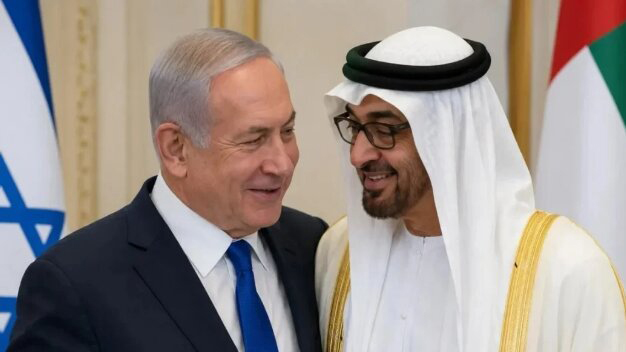
2. Netanyahu, UAE President Hold Expanded Talks with Officials from 10 Countries
In the Middle East, the most consequential diplomacy may be taking shape around shared threats rather than shared politics!
The reported expanded talks point to the potential for a wider security alignment around Israel and the Gulf, particularly over Iran and regional threats.
3. Costa Rica’s Grynspan Edges Ahead in Race to Lead the United Nations
The next UN chief will inherit not just an office, but a test of whether multilateralism can still command the confidence of its members!
Grynspan’s narrow lead in the latest Security Council straw poll puts her candidacy in focus, but the selection ultimately depends on Security Council agreement and a General Assembly appointment, making the positions of the permanent five members central to the outcome.
4. Pakistan, Saudi Arabia, Turkiye Vow Immediate Military Cooperation Under Makkah Pact
A defence pact becomes consequential not when it is signed, but when its promises acquire operational meaning!
The three countries are moving from a collective-defence commitment towards closer intelligence sharing, military coordination and integration of capabilities, with the Riyadh meeting testing how quickly their political agreement can translate into practical security cooperation.
5. US-Led Coalition Ends Iraq Mission as Baghdad Hails New Era of Sovereignty
Sovereignty is measured not only by who leaves, but by who can maintain security after they do!
The end of the coalition’s Iraq mission marks a shift towards Iraqi responsibility for national security, while continued US support in training and intelligence underscores the distinction between ending a military mission and ending a strategic relationship.
|
1. Pakistan’s Year-Long SCO Chairmanship Kicks Off with Coordinators Meeting
Pakistan’s 2026–27 SCO chairmanship begins with a focus on turning shared priorities into practical outcomes, while India’s participation in the Islamabad meeting highlights the continuing value of multilateral engagement even when bilateral relations remain strained.
2. D-8 Secretary General Meets Eurasian Economic Commission Chief in Moscow
D-8’s engagement with the Eurasian Economic Commission explores opportunities to link the economic priorities of developing economies with the Eurasian Economic Union, potentially opening new avenues for trade, investment and interregional partnerships.
3. OIC, UN Humanitarian Agency Sign Cooperation MoU to Boost Joint Crisis Response
OIC and the UN Office for the Coordination of Humanitarian Affairs (OCHA) have signed a cooperation memorandum aimed at improving field coordination, information-sharing and relief efforts, creating a framework to connect the OIC’s member-state networks with the UN’s humanitarian response system.
4. AIIB Targets $20 Billion Annual Financing as 11th Meeting Opens in Doha
Asian Infrastructure Investment Bank aims to double its annual financing to around $20 billion by 2030, with priorities spanning climate resilience, renewable energy, digital transformation and regional connectivity.
5. CAREC Turns 25 with $60 Billion Invested, but Regional Trade Still Lags
After 25 years and $60.2 billion in cumulative investment, the Central Asia Regional Economic Cooperation (CAREC) Program faces a telling gap: trade among its member economies accounted for only about 5% of their total trade in 2025.
|
What we're watching next
Upcoming multilateral events you should look out for
When: 5-6 October, 2026
Where: Dar es Salaam, Tanzania
When: 5-8 October, 2026
Where: Fiji, Tuvalu
Is the region's old bloc logic giving way to overlapping, hedged partnerships?
READ "Netanyahu’s Quiet Visit: Abu Dhabi’s Delicate Dance Between Israel and Iran?" HERE
By Farkhund Yousafzai
|
|
|
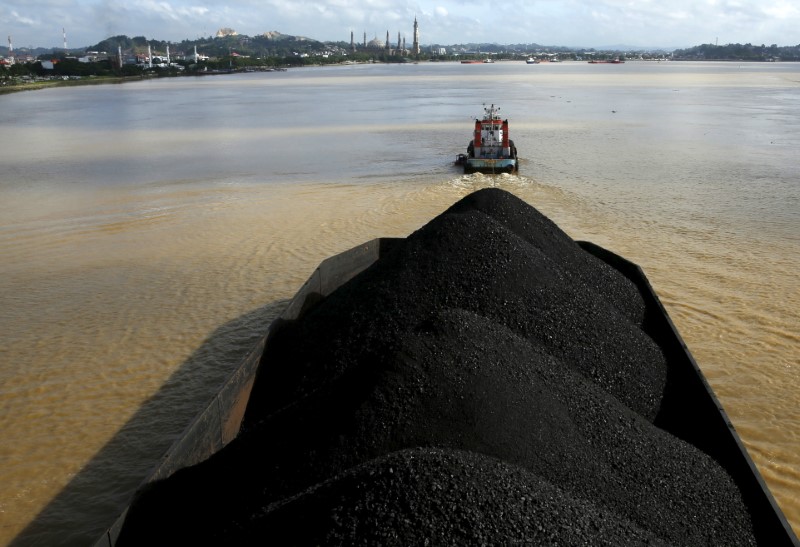
El Nino-hit Borneo rivers are choking Indonesian coal exports, and Asia's power buyers will feel the impact.
READ "How Borneo’s Shrinking Rivers Are Squeezing the World Coal Market" HERE
By Azhari Novy Sucipto
|
|
|
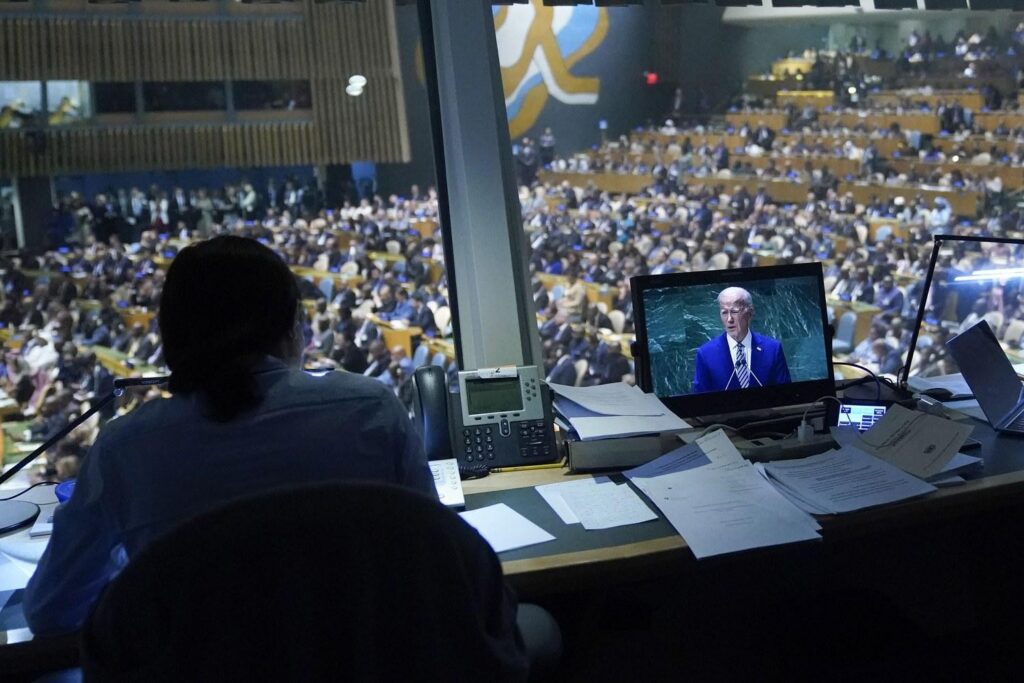
Translators and interpreters quietly carry ideas, culture and diplomacy across language barriers.
READ "How Translation Helps a Globalized World Speak, Connect and Understand" HERE
By Aqsa Fazilat
|
|
|
Get featured in our newsletter
Send your insights, opinions, and articles below
|